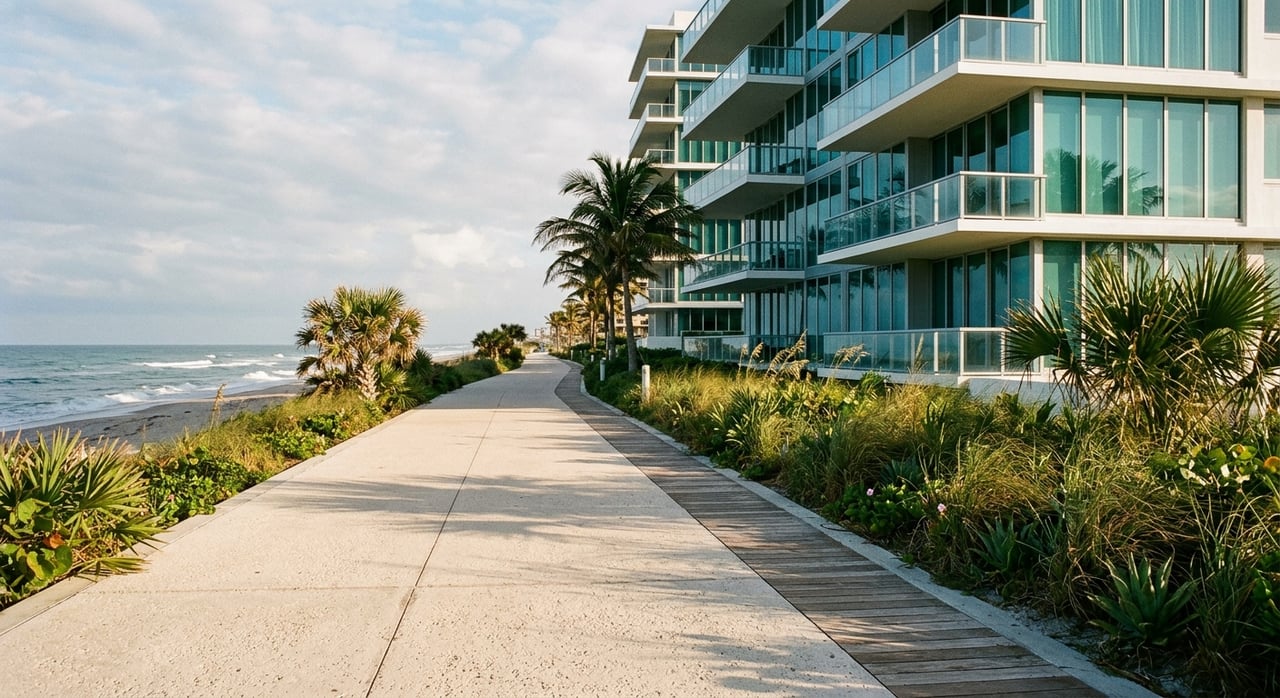
Oceanfront living in Miami Beach is about much more than a view. If you have ever wondered what daily life really feels like along the shoreline, the answer starts with the Beachwalk, a continuous pedestrian corridor that shapes how people move, exercise, and unwind across the city. From park mornings in South Pointe to the social energy of South Beach and the quieter rhythm of Mid-Beach, this guide will help you picture the lifestyle more clearly. Let’s dive in.
What the Miami Beach Beachwalk Connects
The Beachwalk is the oceanfront pedestrian spine of Miami Beach. According to the city, it stretches from South Pointe Park to 87th Street and is open 24 hours, with restrooms, water fountains, playgrounds, and nearby parking at multiple entries and adjacent parks.
The city also says the modern Beachwalk was completed in June 2022 as a wider, ADA-accessible paved path. It connects Miami Beach with Surfside and Bal Harbour, which makes it more than a scenic route. It functions as a daily-use corridor for walking, running, biking, and getting from one part of the beach to another.
That matters if you are thinking about buying or selling near the oceanfront. A connected path changes how you experience the neighborhood day to day, especially when you can pair the shoreline with nearby parks, services, and trolley access.
South Pointe Feels Park-Led
At the southern end of the corridor, South Pointe Park creates one of the clearest lifestyle moments on Miami Beach. The park at 1 Washington Avenue is open sunrise to sunset and includes beach access, paid parking, restrooms, a water fountain, outdoor fitness, a playground, a bark park, and a water feature.
This stretch feels organized around the park first and the beach second. You can picture an easy routine here: a morning walk, time by the water, and a stop in a nearby dining area before heading home. For many buyers, that mix is what makes the south end feel polished and livable.
The city also identifies a compact restaurant area in South of Fifth between Fifth Street and South Pointe Drive, and between Alton Road and Ocean Drive. That gives this part of Miami Beach a strong sense of convenience without the same public intensity found farther north.
Lummus Park Brings South Beach Energy
If South Pointe is the calm edge, Lummus Park is the social heart of the oceanfront. The city says Lummus Park runs along Ocean Drive between 5th Street and 14 Place, with a 10-block beachfront path, paved walking and biking paths, dedicated bike lanes on Ocean Drive, three public restrooms, 18 sand volleyball courts, Muscle Beach, outdoor barbell equipment, and yoga classes on Sundays, Tuesdays, and Thursdays.
This is the stretch where the beach feels most active and public-facing. Concerts, marathons, and other events add to that energy, and the setting blends shoreline activity with the design identity that makes South Beach instantly recognizable.
For residents, this can be a major lifestyle advantage if you enjoy movement, people-watching, and being close to dining and daily conveniences. It also means you should expect a busier atmosphere than the quieter sections of the Beachwalk.
Trolleys Support Car-Light Living
The oceanfront experience is not just about the sand. Transportation plays a real role in how easy daily life feels, especially if you prefer to drive less.
The South Beach trolley operates seven days a week from 8 a.m. to 11 p.m. at about 20-minute intervals. The city says it connects restaurants, grocery stores, pharmacies, hotels, parking lots and garages, entertainment venues, museums, libraries, parks, marinas, and civic facilities.
The city’s visitor information also notes complimentary trolleys connecting South Beach, Mid Beach, and North Beach. When you combine that with the Beachwalk, you get a lifestyle that can feel surprisingly connected for a barrier-island market.
Collins Park Marks a Transition
As you move north, Collins Park helps signal a change in pace. Located at 2100 Collins Avenue, the city describes it as a serene oasis in the heart of bustling Miami Beach, with perimeter parking, outdoor sculptures, palm trees, winding walkways, and NOBE Yoga in the Park.
This area works well as a bridge between the high energy of the South Beach core and the more measured feel of the neighborhoods beyond it. You are still near the beach and cultural destinations, but the public spaces begin to feel a bit calmer and more residential in character.
The city is also studying the Miami Beach Promenade, a pedestrian pathway behind oceanfront properties spanning 24th to 29th Streets between Collins Avenue and the Beachwalk. That detail helps distinguish this part of the shoreline from the better-known Ocean Drive frontage.
Mid-Beach Offers a Quieter Rhythm
For many buyers, Mid-Beach is where the oceanfront starts to feel more balanced. It still gives you direct access to the shoreline, but the atmosphere often reads as more residential and service-oriented.
Mid Beach Park at 46th Street and Collins Avenue adds practical features that shape everyday use. The city says it offers beach access, on-site parking, restrooms, a fenced playground, and ADA-friendly features.
The Middle Beach Loop also serves the 41st Street commercial corridor, Collins Park, the Miami Beach Convention Center, Miami Beach Botanical Garden, and City Hall. Like the South Beach trolley, it runs seven days a week from 8 a.m. to 11 p.m. at about 20-minute intervals.
When you add these pieces together, Mid-Beach stands out for buyers who want ocean access with a little more breathing room. It keeps you connected without placing you at the center of the city’s busiest beachfront activity.
Beach Rules Shape Daily Use
One reason Miami Beach’s shoreline works so well as a shared public space is that it is carefully managed. The city prohibits alcohol and smoking on city beaches and also bans or restricts items such as coolers, glass containers, tents, tables, loud music, balloons, plastic straws, and Styrofoam.
These rules matter more than you might think. They help preserve the experience of the beachfront for walkers, residents, and visitors who use it every day.
If you are considering a move near the ocean, it is helpful to understand that the beach is active but not unmanaged. That balance is part of what supports long-term livability.
Accessibility and Safety Matter
The oceanfront lifestyle is also shaped by practical city services. Miami Beach provides beach access mats at multiple entry points throughout South Beach, Mid Beach, and North Beach.
Manual beach wheelchairs are available on a first-come, first-served basis at Lummus Park and South Pointe Park. The city also posts daily beach conditions and provides an Ocean Rescue hotline at (305) 673-7714.
The city’s beach information notes routine seaweed cleanup across the 7.5-mile beach. It also says crews survey for sea turtle nests before removing sargassum, and it advises swimmers to stay near a lifeguard stand and follow rip-current guidance.
These details are part of the real story of oceanfront living. The appeal is not just visual. It is also about maintenance, access, and how the city supports safe, everyday use.
What This Means for Buyers and Sellers
If you are buying in Miami Beach, the Beachwalk helps you compare oceanfront areas by lifestyle, not just by address. South Pointe offers a park-forward setting with an easy dining cluster nearby. The South Beach core offers energy, events, and iconic beachfront activity. Mid-Beach offers a more measured rhythm while still keeping you close to the water.
If you are selling, these distinctions matter in how a property is positioned. Buyers are often responding to a daily routine as much as a floor plan, especially in a luxury coastal market where walkability, access, and neighborhood feel carry real weight.
The strongest marketing tells that story clearly. It shows how a residence connects to the Beachwalk, nearby parks, transportation, and the pace of life that fits the buyer best.
Miami Beach oceanfront living is highly specific, and that is exactly why local guidance matters. If you want help evaluating beachfront neighborhoods, positioning a property for sale, or understanding where your lifestyle fits best along the shoreline, connect with Kimberly Rodstein to request a private market consultation or exclusive listing preview.
FAQs
What is the Miami Beach Beachwalk?
- The Beachwalk is Miami Beach’s oceanfront pedestrian corridor that runs from South Pointe Park to 87th Street and connects the city to Surfside and Bal Harbour.
What is South Pointe Park like in Miami Beach?
- South Pointe Park offers beach access, restrooms, outdoor fitness, a playground, a bark park, a water feature, and a calmer park-led setting at the southern end of the oceanfront.
What is the lifestyle like near Lummus Park in South Beach?
- Lummus Park is one of the busiest and most social parts of the beachfront, with walking and biking paths, volleyball courts, outdoor fitness areas, and regular public events.
Is Mid-Beach quieter than South Beach?
- Mid-Beach generally feels more measured and residential in pace, while still offering beach access, parks, and trolley connections to nearby commercial and civic areas.
Are there trolley options along the Miami Beach oceanfront?
- Yes, the city operates free trolley service that connects South Beach, Mid Beach, and North Beach, with South Beach and Middle Beach routes running daily from 8 a.m. to 11 p.m. about every 20 minutes.
Are Miami Beach beaches accessible?
- Yes, Miami Beach provides beach access mats at multiple entry points, and manual beach wheelchairs are available first-come, first-served at South Pointe Park and Lummus Park.
What beach rules should Miami Beach residents know?
- Miami Beach prohibits alcohol and smoking on city beaches and bans or restricts items like glass containers, tents, tables, loud music, balloons, plastic straws, and Styrofoam.