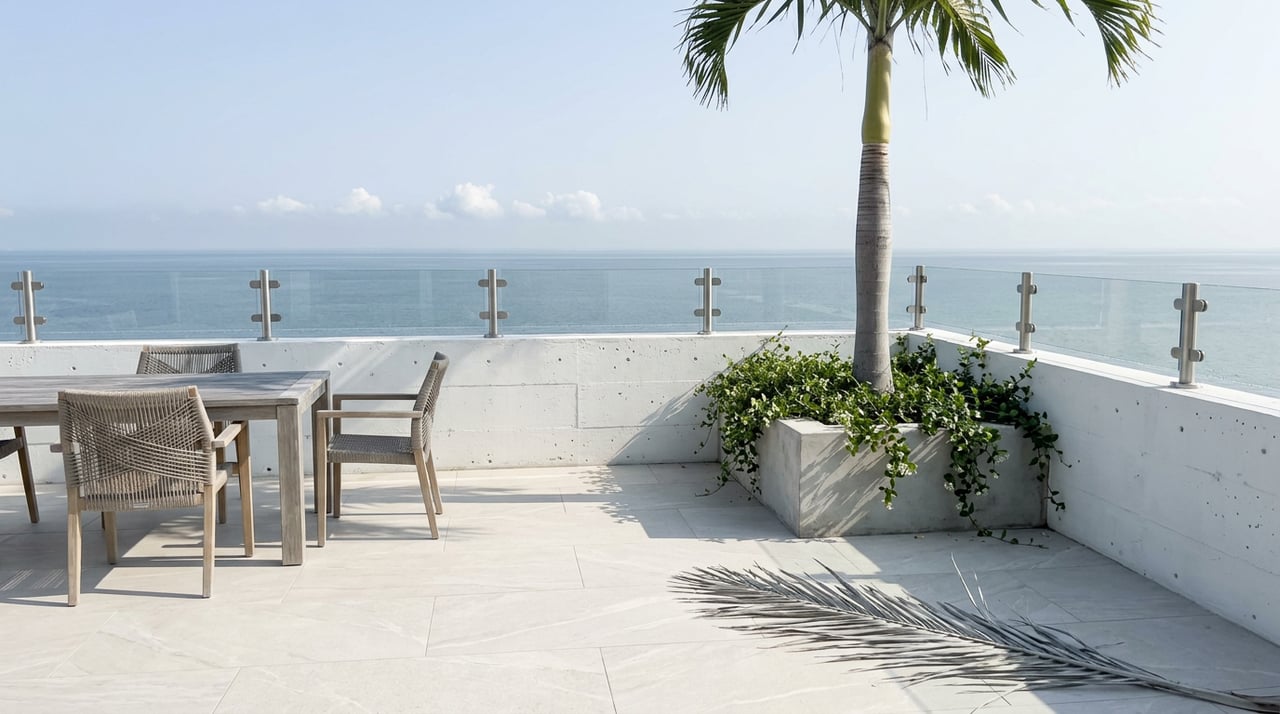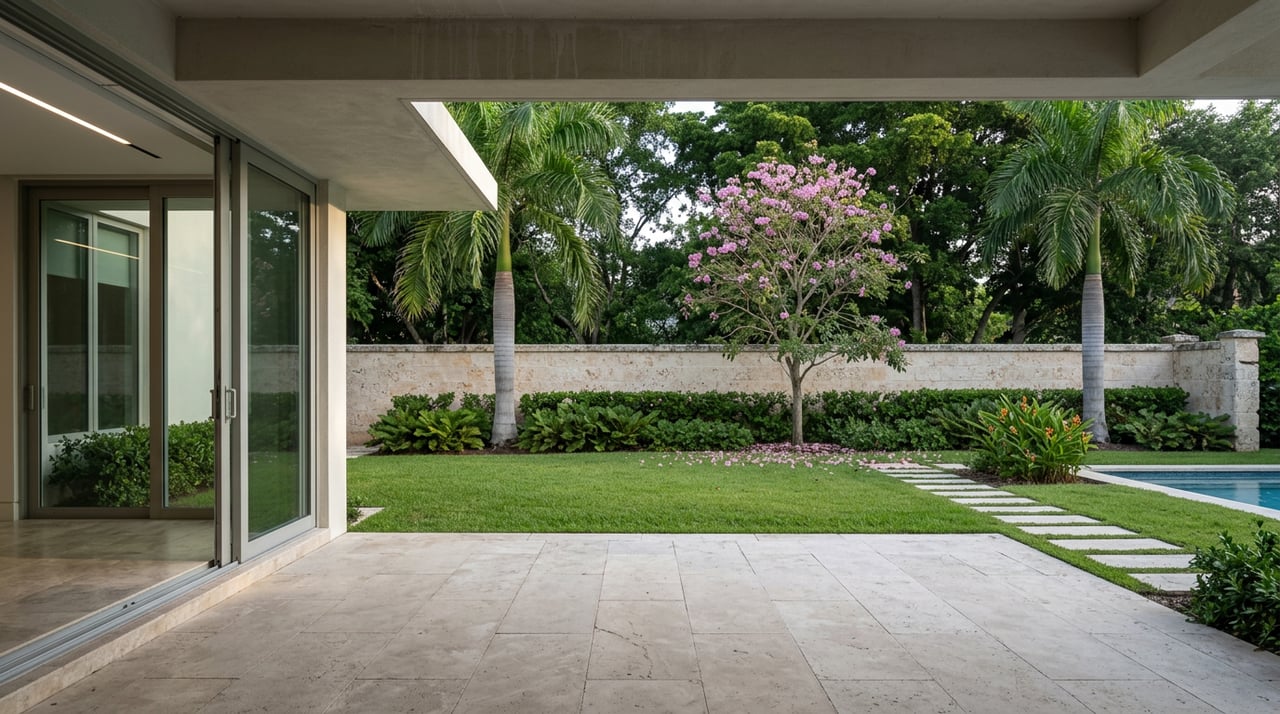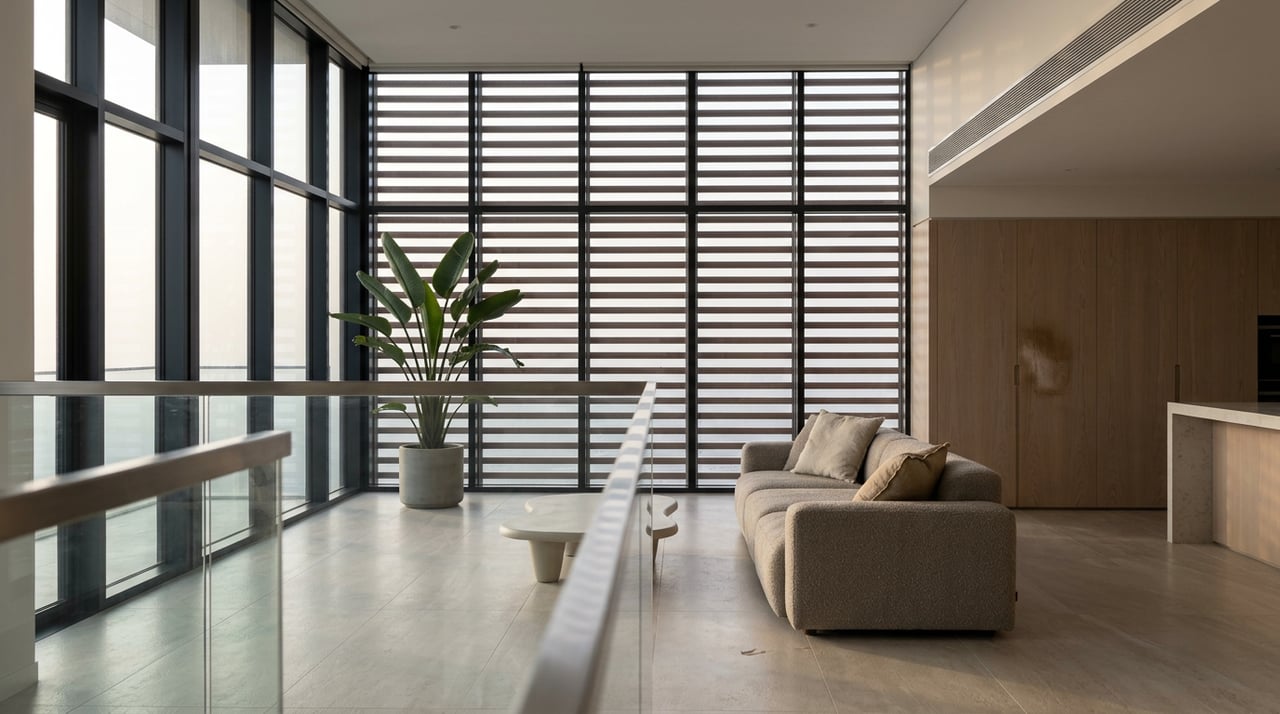
A buyer walked into the Rivage sales gallery at 10245 Collins Avenue in June, then drove eight blocks south the same afternoon to tour a two-bedroom resale at Balmoral. On paper, both were "Bal Harbour oceanfront condos." The Rivage sky villa was quoted around $3,925 per square foot with a 2026 to 2027 delivery. The Balmoral unit sat at roughly $1,050 per square foot, delivered, keys in hand, priced roughly a third below its neighbors and still on market past 180 days. The buyer's question at the end of the day was not about view or finishes. It was: which one is the actual comparable, and what is the other one doing on the same shopping list?
The answer is that they are not on the same shopping list, and Bal Harbour's June 2026 headline median of roughly $2.8 million is the wrong unit of analysis. The town's one-third-square-mile oceanfront strip is running as three separate condo economies. Reading them as one market is how buyers overpay and how sellers price into a stall.
The three tiers, and why they don't compete
Bal Harbour has fewer than twenty residential towers between Haulover Cut and 96th Street. Every one of them sits on Collins Avenue or a spur off it. The tiers below are not geographic. They are structural and regulatory.
| Tier | Representative buildings | Approx. list PPSF (mid-2026) | Delivery / vintage | Reserve & milestone posture |
|---|---|---|---|---|
| Pre-construction | Rivage (10245 Collins, 56 units, SOM, Rottet Studio, Related + Two Roads) | ~$3,925 | 2026–2027 | Funded from day one, no recertification overhang |
| Delivered trophy | Oceana (2016, Arquitectonica), St. Regis Bal Harbour (2011), One Bal Harbour / Ritz-Carlton | ~$2,100–$2,400+ | 2011–2017 | Modern reserves, no imminent milestone |
| 1964–1994 mid-tier | Harbour House (1964), Balmoral (1977), The Tiffany (1982), Bal Harbour Tower (1990), The Palace (1994), Bellini (2004), Majestic Tower (1999) | ~$1,000–$1,450 | 30+ years or approaching | Under the full weight of SB 4-D, milestone, and SIRS |
The Q1 2026 luxury condo aggregate for Surfside plus Bal Harbour combined printed around $1,297 per square foot with roughly 4.5% year-over-year price-per-foot growth. That number is a blend, and the blend is misleading. Within it, the top tier is compounding upward on scarcity, and the bottom tier is discounting into a reserve-funded regulatory reset. Averaging them tells you nothing about either.
The January 1, 2026 rule that repriced the older stack
For decades, Florida condo boards routinely voted to waive or reduce reserve funding for major structural items to keep monthly HOA fees competitive. That option is gone for the eight SIRS components: roof, load-bearing walls, foundation, fire protection, plumbing, electrical, waterproofing, and windows and exterior doors. Under Florida Statute 718.112(2)(g), reserves for those items can no longer be waived for budgets adopted after December 31, 2024, and full funding began January 1, 2026. Milestone structural inspections under Florida Statute 553.899 apply to any condo three or more habitable stories, at 30 years of age or 25 years within three miles of the coast, with SIRS coordination allowed through December 31, 2026 per DBPR guidance.
The consequence, in Miami-Dade, is not theoretical. In the 1975 to 1995 vintage stock across the county, special assessments in 2026 are commonly landing at $30,000 to $75,000 per unit, and in cases involving combined roof, concrete, and waterproofing scopes, above $100,000 per unit.
Bal Harbour's mid-tier towers all sit inside that vintage window. Harbour House was built in 1964. Balmoral in 1977. The Tiffany in 1982. Bal Harbour Tower in 1990. The Palace in 1994. These are not distressed buildings. They are structurally sound, professionally managed, oceanfront addresses. The reason a Balmoral two-bedroom is quoted at roughly $1,050 per square foot while a comparably-sized unit at Oceana clears above $2,000 is not view, floor plan, or lobby finish. It is the market pricing in reserve funding, milestone Phase 2 exposure, insurance posture, and Fannie Mae warrantability. Roughly 5,000 condos statewide sit on the Fannie Mae unavailable list, with 696 buildings across Miami-Dade, Broward, and Palm Beach. A building on that list loses conventional financing for every unit inside it.
Rivage and Oceana are two different trades
The buyer question that reveals whether someone has done the work is this: what is the incremental dollar at Rivage buying that the incremental dollar at Oceana is not?
Rivage disclosed an estimated HOA of roughly $2.10 per square foot at launch. Applied to a 3,300 square foot floor plan, that is a monthly line item near $6,900 before taxes and insurance. That number funds ongoing service and the reserves for roughly 25,000 square feet of amenity programming that has not yet been staffed or tested. A delivered building like Oceana lets a buyer stand in the lobby on a Wednesday afternoon, count the front-desk staff, watch a service call go through, and read three years of actual budgets against three years of actual expense. The trade-off between the two is not price per square foot. It is:
- Capital timing. Pre-construction lets a buyer stage deposits against a 2027 delivery. A resale requires closing capital now.
- Observable operations. A delivered building shows you how the amenity dollar is actually being spent. A pre-construction pro forma tells you how the developer intends it to be spent.
- Rescission and escrow mechanics. Florida gives condo buyers a 15-day rescission window after receipt of condo documents. The pre-construction contract's escrow release triggers, default definitions, and milestone deposit mechanics are where the real risk allocation lives. A delivered resale's risk lives in the estoppel, the reserve study, and the meeting minutes.
- Warrantability at exit. Rivage will deliver funded and current. A 1970s or 1980s tower being resold in 2028 will be judged by lenders on the strength of its SIRS funding plan and any Phase 2 findings, both of which the seller does not control.
Neither trade is wrong. They are answers to different questions.
Where the price is actually doing work
The mid-tier stack is where the spread is widest and the diligence pays for itself. A working list of the towers most buyers are actually comparing, with the vintage that puts each squarely inside the post-Surfside regime:
- Harbour House, 10275 Collins, 452 units, 1964
- Balmoral, 9801 Collins, 420 units, 1977
- The Tiffany, 10175 Collins, 150 units, 1982
- Bal Harbour Tower, 9999 Collins, 116 units, 1990
- The Palace, 10101 Collins, 102 units, 1994
- Majestic Tower, 9601 Collins, 165 units, 1999
- Bellini, 10225 Collins, 77 units, 2004
Two units at the same list price in two of these towers can carry radically different real prices once the SIRS funding schedule, the milestone report, and any pending assessment resolutions are laid on the table. In Bal Harbour Tower, recent sales in the last 180 days were closing near $1,020 per square foot with days-on-market averaging above 200. In Harbour House, sold-in-180-days pricing was closer to $950 per square foot with even longer marketing windows. Balmoral is in the middle of a full common-area renovation, which is either a completed capital story or an unfinished one depending on which meeting minutes you read. Same street, three different underwriting problems.
The five documents that price the difference
A serious offer in Bal Harbour in 2026 is not shaped by the MLS remarks. It is shaped by what the association files show. Before writing an offer on any building older than 20 years, request:
- The most recent Structural Integrity Reserve Study and its funding schedule
- The milestone inspection report, including any Phase 2 findings and the 365-day repair clock those trigger
- The two most recent annual budgets and reserve schedules, plus the current reserve balance line by line
- Twenty-four months of board and membership meeting minutes, where reserve transfers, waivers, and pending assessments are recorded
- The master insurance declarations, including wind and flood coverage limits and deductibles
If the seller cannot produce these within five business days of asking, that is signal, not silence. The current-year budget line for reserves compared to the SIRS-recommended contribution is the single most predictive number a buyer can read. When those two numbers match, the building is on schedule. When they diverge, an assessment is being deferred, not avoided.
FAQ
Does the 2026 buyer's-market language apply to Bal Harbour trophy stock? MIAMI REALTORS' chief economist projected a broad buyer's market through mid-2026. In Bal Harbour, that framing holds for the mid-tier resale stack, where inventory has extended marketing windows above 150 days. It does not hold for the delivered trophy tier or for Rivage's remaining allocations, where scarcity is doing the work and price discovery has moved upward, not down.
Can a seller pay off a pending special assessment at closing? Yes, and this is standard in Miami resale transactions in 2026. A seller can pay the full outstanding balance at or before closing so the buyer takes title clear, or the parties can negotiate a price reduction equal to the assessment. The point is to know the number before the inspection period ends, not after.
How does HB 913 change what a buyer sees in the file? HB 913, effective July 1, 2025, gave boards more flexibility on how to fund reserves (loans, lines of credit, staged special assessments) but did not restore the ability to waive them for the eight SIRS components. It also raised the reserve threshold from $10,000 to $25,000, indexed to inflation. In practice, a buyer should expect to see a longer menu of funding mechanics in the meeting minutes, not a lighter obligation.
Is Rivage the last oceanfront site in Bal Harbour? Public marketing describes it as very likely the last oceanfront property to be developed in Bal Harbour. That claim shapes the pricing thesis for the pre-construction tier and, by extension, for the delivered trophy tier that will absorb the demand it cannot house.
The Bal Harbour condo market rewards buyers and sellers who read at the tower level rather than the town level. If you are weighing a specific address, a specific stack within a building, or how a competing listing's reserve posture compares to yours, Kimberly Rodstein is available for a private market consultation and, where relevant, an exclusive listing preview.