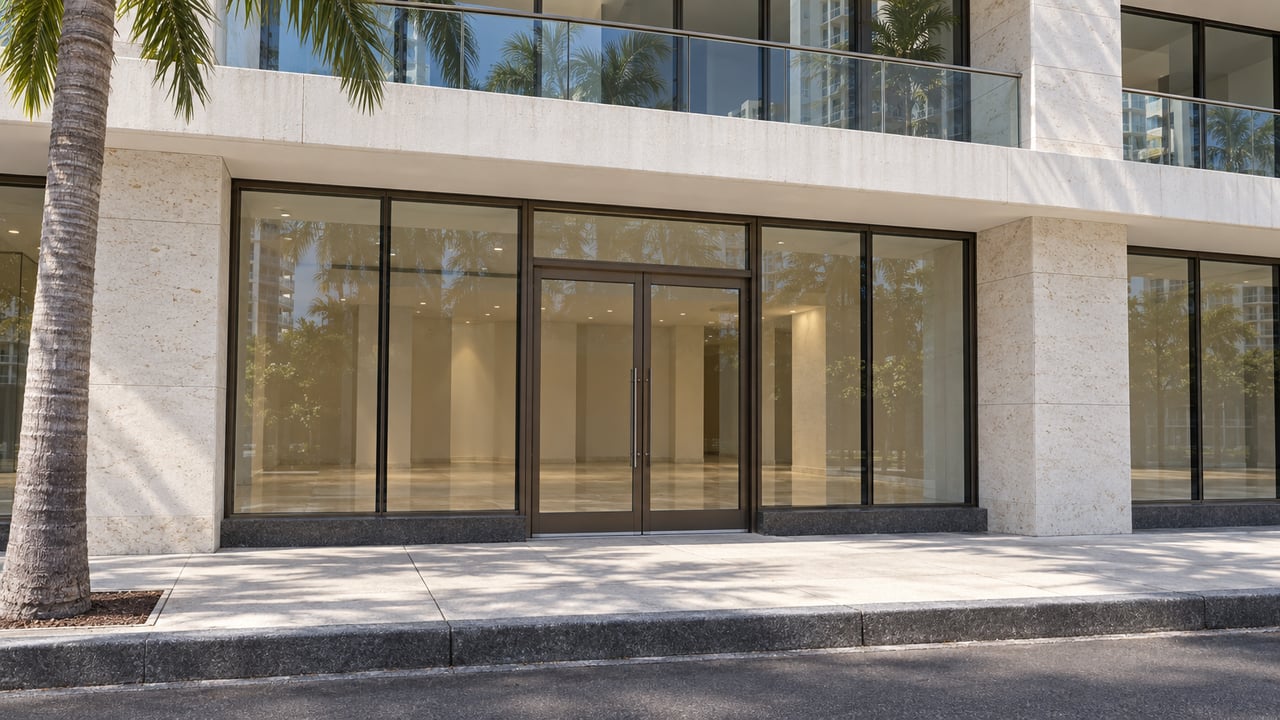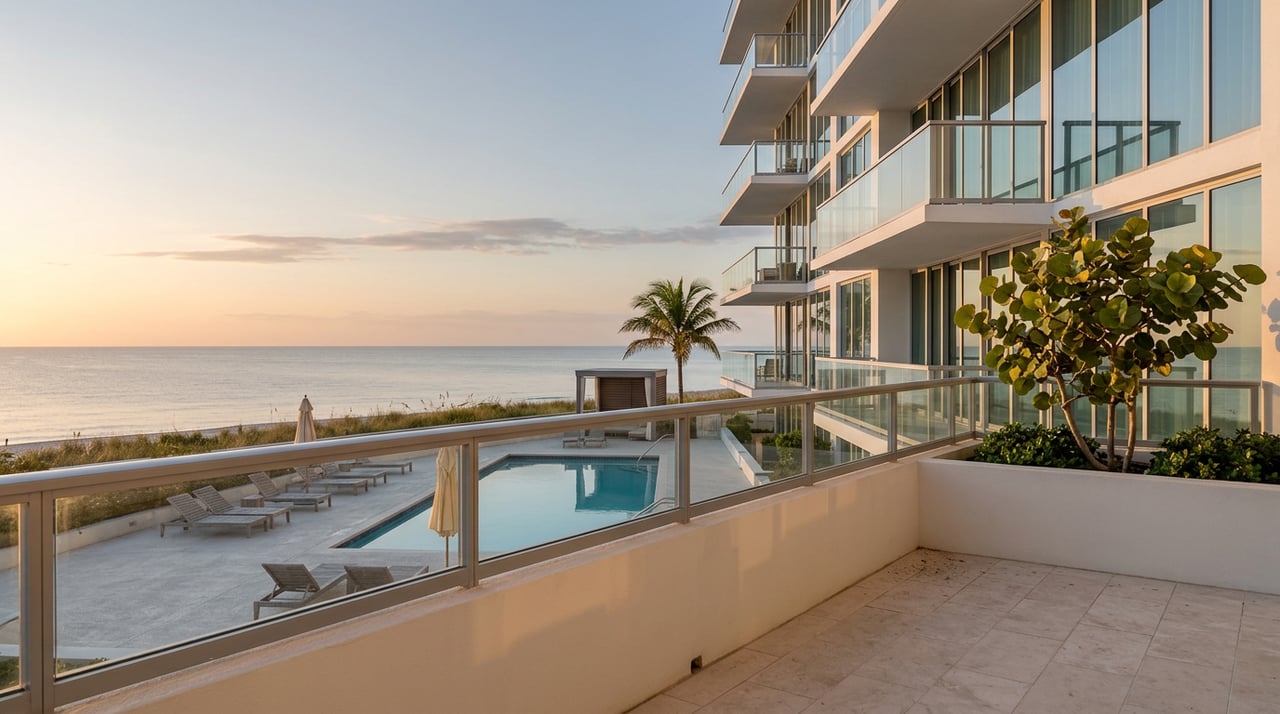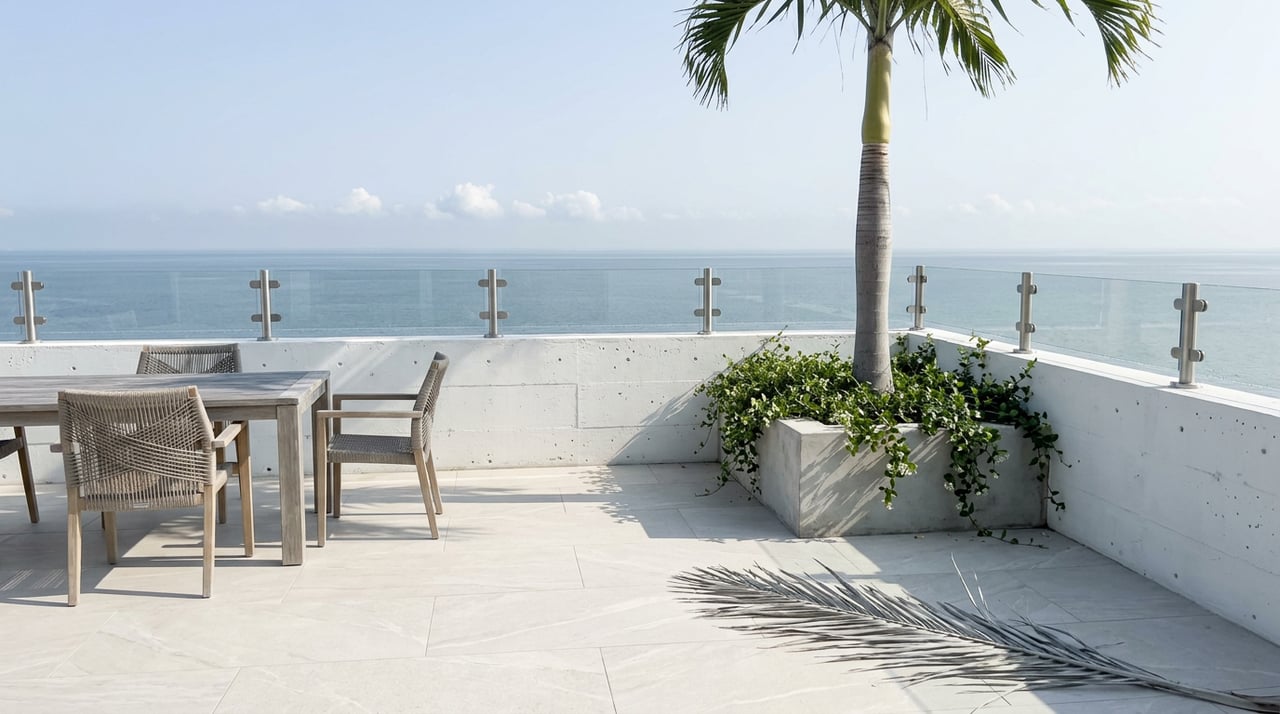
Would you pay the same price for two condos with an identical square footage, an identical building age, and an identical view, if one came with a six-figure bill attached and the other didn't?
That is the choice hiding inside every Miami Beach condo listing right now, and the median price on your screen cannot tell you which one you're looking at. As of July 2026, the median list price for a Miami Beach condo sat at $539,000, down from $550,000 a year earlier. That number is accurate. It is also close to useless for deciding what to offer, because it averages together two buildings that no longer compete for the same buyer.
A studio on West Avenue and a penthouse at Faena House share a zip code and not much else
Walk West Avenue in South Beach and you'll find 1960s mid-rises where a studio can still trade well under the city median. Walk a few blocks toward the ocean and you'll find Faena House, where penthouse transactions have cleared above $3,000 a square foot. Both are Miami Beach condos. Neither is a substitute for the other, and the gap between them isn't really about the view.
It's about what each building owes.
Florida's post-2022 structural reserve law didn't touch every building the same way. Newer towers and buildings that funded their reserves properly from day one absorbed the new rules with barely a ripple. Older buildings, the ones built before 1990 that spent decades letting owners vote down reserve contributions to keep monthly fees low, are now catching up all at once. Buyers looking at pre-1990s Miami Beach stock are increasingly running into special assessments in the $50,000 to $200,000-plus range for concrete restoration, roof replacement, and waterproofing.
That is the split the headline median is hiding. Here's what it looks like side by side.
| Pre-1990s stock (West Avenue and older inland mid-rises) | Newer or fully reserved stock (Faena House, Eighty Seven Park, Five Park, Ritz-Carlton Residences on Surprise Lake) | |
|---|---|---|
| Typical construction era | 1960s to 1980s | 2015 to present, or older buildings that funded reserves properly early |
| Reserve status | Catching up on decades of underfunded reserves | Fully funded, no structural backlog |
| Special assessment exposure | Commonly $50,000 to $200,000-plus per unit for concrete, roof, or waterproofing work | Minimal to none tied to structural catch-up |
| Financing | Some buildings face restricted or cash-only buyer pools until compliance is documented | Conventional financing generally available |
| Resale pricing | Wide range, frequently well under $1,000 per square foot in inland pockets | Can exceed $3,000 per square foot at the top of the market |
What actually changed, and when
The mechanism behind this split has a specific start date, and it already passed. Under Florida's Structural Integrity Reserve Study rules, any condo association whose budget was adopted on or after January 1, 2025 lost the ability to waive reserve funding entirely. Associations that had adopted an earlier budget could still vote to waive or reduce contributions for one more cycle, but that grace period ended on January 1, 2026, when full funding became mandatory across the board, according to the Florida Department of Business and Professional Regulation. For a building that spent thirty years underfunding its reserves, that's not a gradual phase-in. It's a bill that comes due.
Layered on top of the reserve rule is the milestone inspection requirement, which triggers structural inspections at 25 years of age for any building within three miles of the coast, which is effectively all of Miami Beach, and every 10 years after that. Miami-Dade County has run its own building recertification program since 1975, and the county updated it in June 2022 to align with the new state timeline, according to Miami Realtors. Two overlapping clocks, both pointed at the same older buildings.
In November 2024, condo owners at 1060 Brickell were hit with a $21 million special assessment after a structural integrity reserve study flagged facade, roof, and pool deck work, with some individual unit bills exceeding $40,000. It's not a Miami Beach address, but it's the same law, the same trigger, and the same math that's now working through Miami Beach's older stock.
Where the new-build premium actually comes from
None of this explains why Faena House commands $3,000-plus a square foot on its own. Location and finish do plenty of that work. But part of the premium buyers are paying at towers like Faena House, Eighty Seven Park, and Five Park is the absence of a liability, not just the presence of amenities. A buyer at one of these buildings isn't inheriting forty years of deferred concrete work. A buyer at Ritz-Carlton Residences on Surprise Lake, priced from roughly $1 million into the $5 million-plus range, is paying for a non-oceanfront waterfront address wrapped around a private lake on the island's western side, a different value proposition than beachfront towers, and one that comes without the decades of deferred maintenance an older concrete building might carry.
Compare that to a well-located but older building where the reserve study just came back short. The unit might list for less. The math after a $100,000 assessment often isn't.
The documents that tell you which market you're actually in
If you're comparing two Miami Beach condos at similar prices, the listing sheet won't tell you which side of this split you're on. These three documents will:
- The Structural Integrity Reserve Study. This tells you what the building's major structural components will cost to maintain or replace, and what percentage of that cost is actually funded today.
- The milestone inspection report, if the building is old enough to require one. A completed Phase 1 with no findings is a meaningfully different situation than a building still waiting on its inspection or moving into Phase 2.
- A written disclosure of current, pending, and anticipated special assessments, including per-unit dollar amounts and payment timelines.
Florida law entitles buyers to the association's disclosure package, but the timing is up to you. Requesting these three documents before you make an offer, rather than after you're under contract, is the difference between negotiating from strength and discovering a bill after you've already committed. When an assessment is already on the books, it's standard in 2026 resale transactions for the seller to pay the outstanding balance at closing, or for the price to be reduced by the assessment amount instead.
The county's response, and who it actually helps
Miami-Dade County reopened its Condominium Special Assessment Loan Program for a one-month application window in June 2026, offering roughly $15 million in loan assistance with priority given to residents 62 and older. The county had already distributed more than $55 million through the program by that point. It's a meaningful safety net for owner-occupants on fixed incomes facing a sudden bill, but it's not designed for investors or buyers of non-primary residences, and the window has already closed for this cycle. For most buyers evaluating a purchase today, the loan program is context, not a solution.
FAQ
Does the reserve rule only apply to older buildings? No. The Structural Integrity Reserve Study requirement is triggered by a building's height, three stories or more, not its age. A condo tower that closed sales last year still needs a SIRS on file. It's just far less likely to owe money against it yet, because there's no decades-long funding gap to close.
Is December 31, 2026 a hard deadline for every building's milestone inspection? Not quite, and this trips people up. For most eligible buildings, the milestone inspection deadline has already passed. December 31, 2026 is specifically the outer limit for completing a Structural Integrity Reserve Study when an association chooses to run it alongside its milestone inspection.
If a listing shows a low monthly HOA fee, is that a good sign? Not automatically. A low fee can mean a well-run building with modest needs, or it can mean a reserve fund that hasn't yet caught up to what the SIRS says it should be. Ask for the study and the date the current budget was adopted before you read the fee as a green flag.
A closing note
The Miami Beach condo market didn't get more expensive or cheaper this year so much as it got more legible, if you know where to look. The median price will keep averaging together buildings that have nothing in common, because that's what medians do. The reserve study, the inspection report, and the assessment disclosure are what actually tell you which Miami Beach you're buying into.
If you're comparing units across this divide and want someone to pull the documents before you write an offer, not after, Kimberly Rodstein can request a private market consultation or exclusive listing preview built around exactly this question.